
Plant identifier · Plant care · For plant parents

Your plant is trying to tell you something.

Point your camera at it. Planted names the species — monstera, pothos, snake plant, whatever the cutting from your friend turns out to be — scores its health out of 100, and hands you a numbered plant care plan for that plant. Not generic advice about watering less.

Download Planted on the App Store Planted on Google Play Coming soon
Free to start · iOS
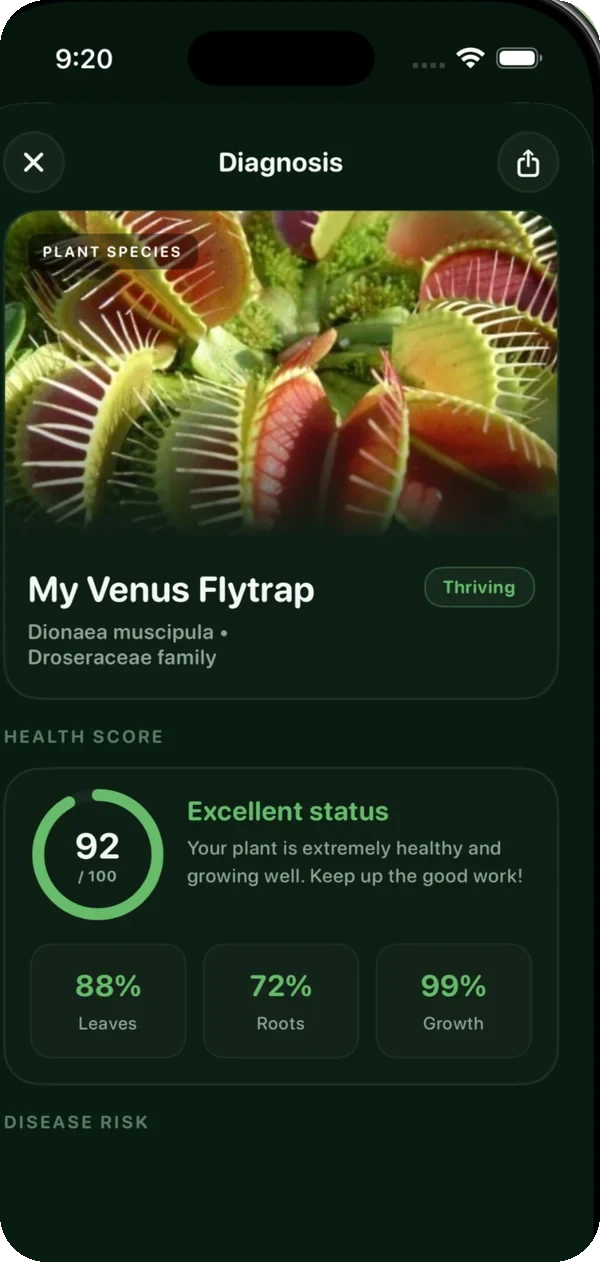
A diagnosis in Planted: a Venus flytrap identified as Dionaea muscipula in the Droseraceae family, marked Thriving, with a health score of 92 out of 100 broken into leaves, roots and growth.

How it works

One photo, then a plan you can actually follow

No plant knowledge required going in. Whether you're a new plant parent or you've got forty pots and a grow light, that's rather the point.

  1. 1

    Point and shoot

    Frame the plant in the reticle and take the photo. Works on houseplants, garden plants, succulents, herbs — anything green you're worried about.

  2. 2

    Read the diagnosis

    Species, Latin name and family, a health score out of 100 split across leaves, roots and growth, plus a disease risk read and how confident it is.

  3. 3

    Work the plan

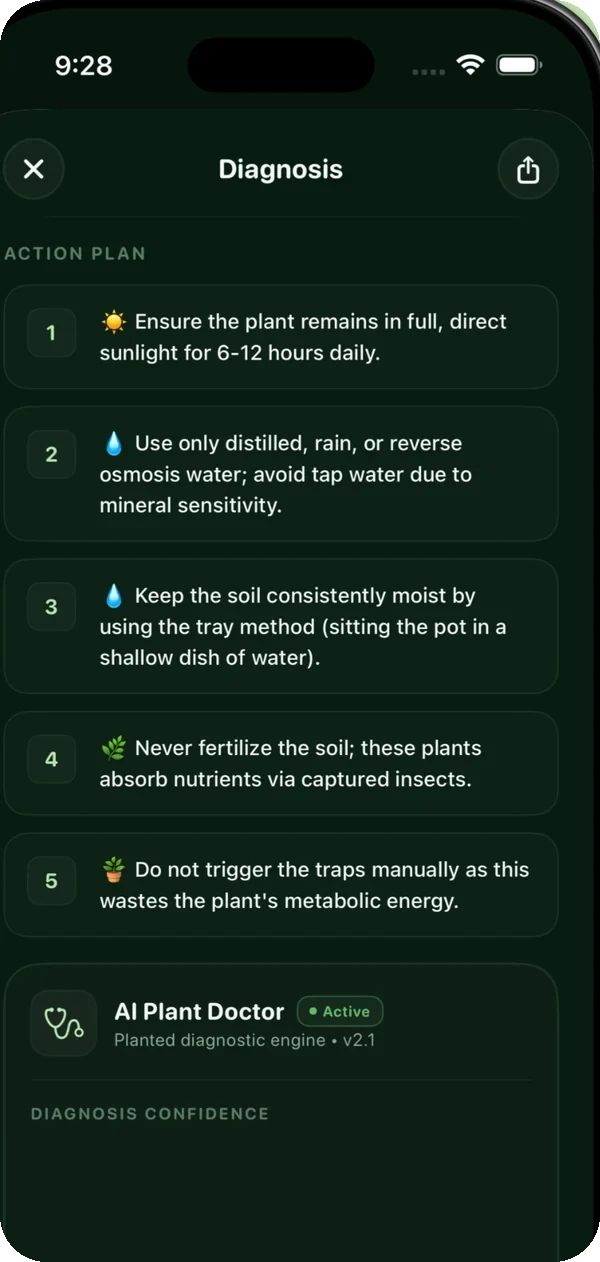
    A numbered action plan for that species, and the recurring tasks that follow from it — each one telling you why it's on the list today.

What it does

Five things, all of them specific

Most plant apps identify a species and stop. The useful half is what comes after — what's wrong with this one, and what to do about it this week.

The difference

Advice for your plant, not for plants

A Venus flytrap gets told to use only distilled or rainwater, never to fertilise the soil, and not to trigger the traps for fun because it wastes the plant's energy. A pothos gets none of that. The plan is written after the species is identified, which is why it can be that specific — and why it's worth more than a search result.
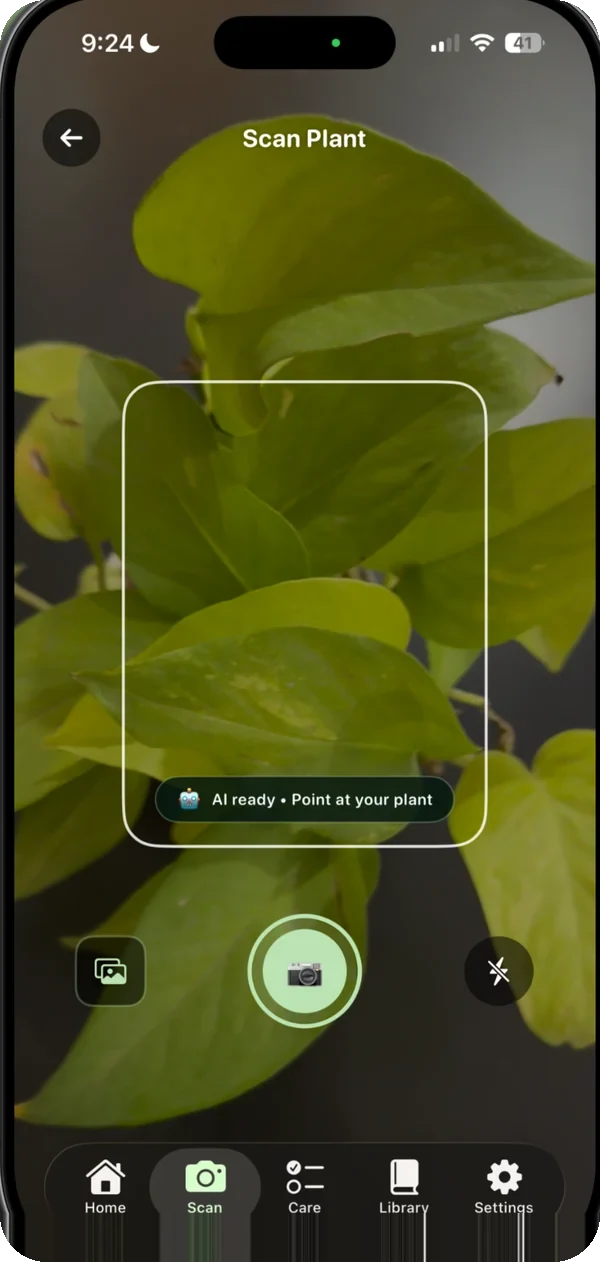
Identify

Name, Latin name, family

Common name, binomial and family, so you can go and read further elsewhere rather than taking one app's word for what you own.

Health score

Out of 100, and broken down

One number, then leaves, roots and growth separately, with a status label. The value isn't the score — it's watching it move after you change something.

Diagnosis

Disease risk, with confidence shown

What's likely wrong and how sure it is, based on the visual markers it found. A low confidence reading is the app telling you to take a better photo.

Care tasks

Reminders that say why

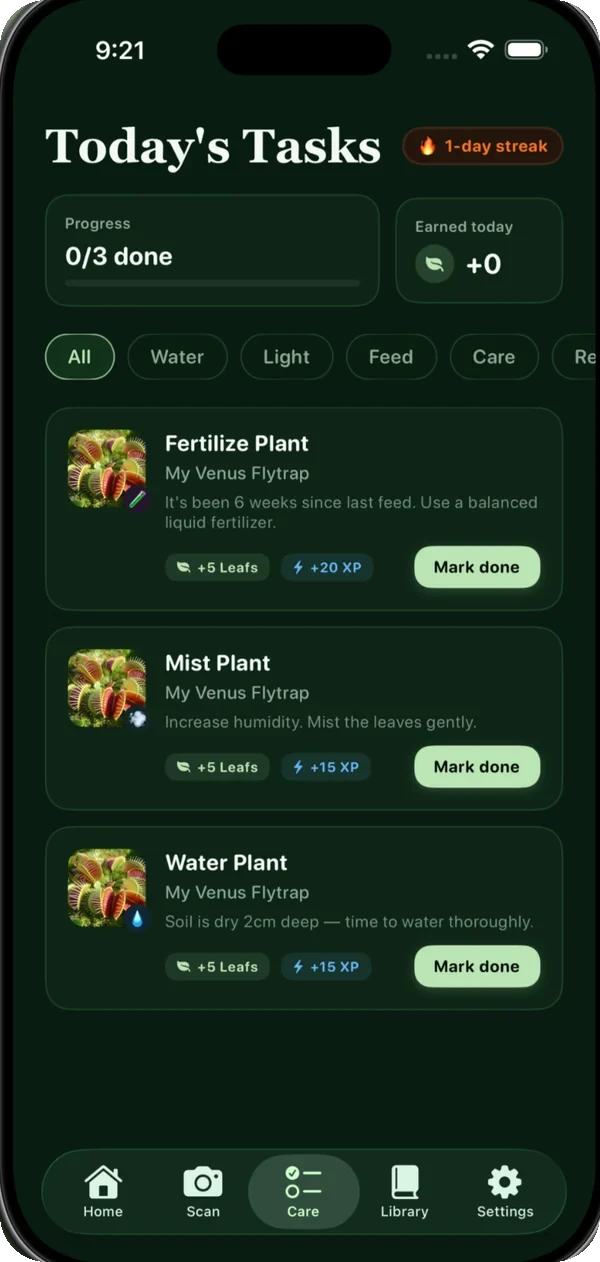
Water, light, feed, care and repot — each task carrying its reason. "Soil is dry 2cm deep." "It's been six weeks since the last feed." Not just a calendar ping.

Streaks

The bit that keeps you doing it

Marking tasks done earns leaves and XP and builds a daily streak. Plants die from inconsistency far more often than from ignorance, so this is doing real work.

A second opinion, not a botanist

Planted reads what the camera can see. That's enough to catch the common things — the overwatering, the wrong light, the pest you hadn't spotted yet — and to tell you what a plant of that species actually needs.

It isn't infallible, and a photo can't see root rot under the soil or tell you what your tap water contains. Treat a diagnosis as a strong hint, not a verdict, and if a plant matters to you and it's going badly, a nursery will still beat any app.

Questions

Frequently asked

Yellow leaves are a symptom with a dozen causes — overwatering, underwatering, too little light, nutrient deficiency, root rot, pests, or just an old leaf being dropped. Which one it is depends on the species, where the yellowing starts and what the rest of the plant is doing. That's the problem Planted is built for: it identifies the species first, then reads the pattern in the photo and gives you the likely cause with a plan, rather than a list of everything it could be.

Houseplants, garden plants, succulents, herbs, trees and weeds. You get the common name, the Latin binomial and the family — enough to go and read more elsewhere rather than taking one app's word for it.

A score out of 100, broken into leaves, roots and growth, with a status label and a disease risk read. Treat it as a reading of what the camera can see today rather than a verdict. The useful part is watching it move once you've changed something.

No — and it's the difference worth caring about. Each task carries the reason it exists ("soil is dry 2cm deep", "six weeks since the last feed"), and the plan is written for the identified species. A Venus flytrap is told never to fertilise the soil and to use only distilled water. A pothos isn't.

They're sent over an encrypted connection, used to produce your diagnosis, and are not sold, published or used to train public models. Detail is in the privacy policy.

It's coming, but there's no date yet. Planted is iOS only for now — the Google Play badge on this page is a marker, not a link.

Stop guessing what it needs

Free to start. Works on the sad one in the corner.